Signs Your Roof Needs Immediate Attention This Season
Reading time: 12 minutes
Here’s a scenario that plays out thousands of times every year: A homeowner notices a small water stain on the ceiling, dismisses it as “probably nothing,” and moves on with their busy life. Six months later, they’re staring at a $18,000 repair bill for structural damage, mold remediation, and full roof replacement. The original fix? A $400 flashing repair.
Your roof is the single most important protective system on your home — and in 2026, with increasingly unpredictable weather patterns, rising material costs, and homes aging faster than ever, ignoring early warning signs isn’t just risky. It’s financially reckless. The good news? Your roof almost always sends distress signals well before catastrophic failure. You just need to know what to look for.
This guide cuts through the noise and gives you a practical, season-ready framework for identifying the warning signs that demand immediate attention — before a minor repair becomes a major crisis.
Table of Contents
- Why Timing Matters More Than Ever in 2026
- Exterior Warning Signs You Can See From the Ground
- Interior Red Flags: What’s Happening Inside Your Home
- Seasonal Stress Points: What Each Season Does to Your Roof
- Roof Damage by Cause: 2025 Industry Breakdown
- Repair vs. Replace: A Decision Framework
- Real-World Scenarios: Learning From Others’ Mistakes
- 3 Common Challenges Homeowners Face (and How to Beat Them)
- Frequently Asked Questions
- Your Roof Protection Action Plan: Start Today
Why Timing Matters More Than Ever in 2026
Roofing isn’t what it was a decade ago. According to the National Roofing Contractors Association (NRCA), average residential roofing costs increased by 34% between 2022 and 2025, driven by supply chain pressures, labor shortages, and the rising cost of asphalt and composite materials. In 2026, that trend shows no sign of reversing.
More critically, climate volatility has accelerated roof deterioration timelines. Meteorological data from NOAA confirms that 2025 was among the top three most storm-active years in U.S. recorded history, with hail events alone causing an estimated $22 billion in property damage — a significant portion of which affected residential roofing systems.
The strategic bottom line: catching problems early in 2026 doesn’t just save money. It protects your home’s structural integrity, your insurance premiums, and your family’s safety. Seasonal inspection — ideally at the start of spring and before winter — is no longer optional. It’s essential homeownership practice.
“Most roof failures we see in 2026 aren’t sudden events — they’re the cumulative result of 12 to 18 months of ignored early warnings. By the time water is visibly entering a home, the underlying damage is almost always far more extensive than it appears.” — James Hartley, Certified Roofing Inspector, National Roofing Contractors Association
Exterior Warning Signs You Can See From the Ground
You don’t need to climb a ladder to catch most early-stage roof problems. A careful visual inspection from ground level — using binoculars if necessary — can reveal a surprising amount. Here’s what to look for:
Shingle Deterioration Signals
Shingles are your roof’s first line of defense, and they communicate their condition clearly if you know the language. Watch for these specific indicators:
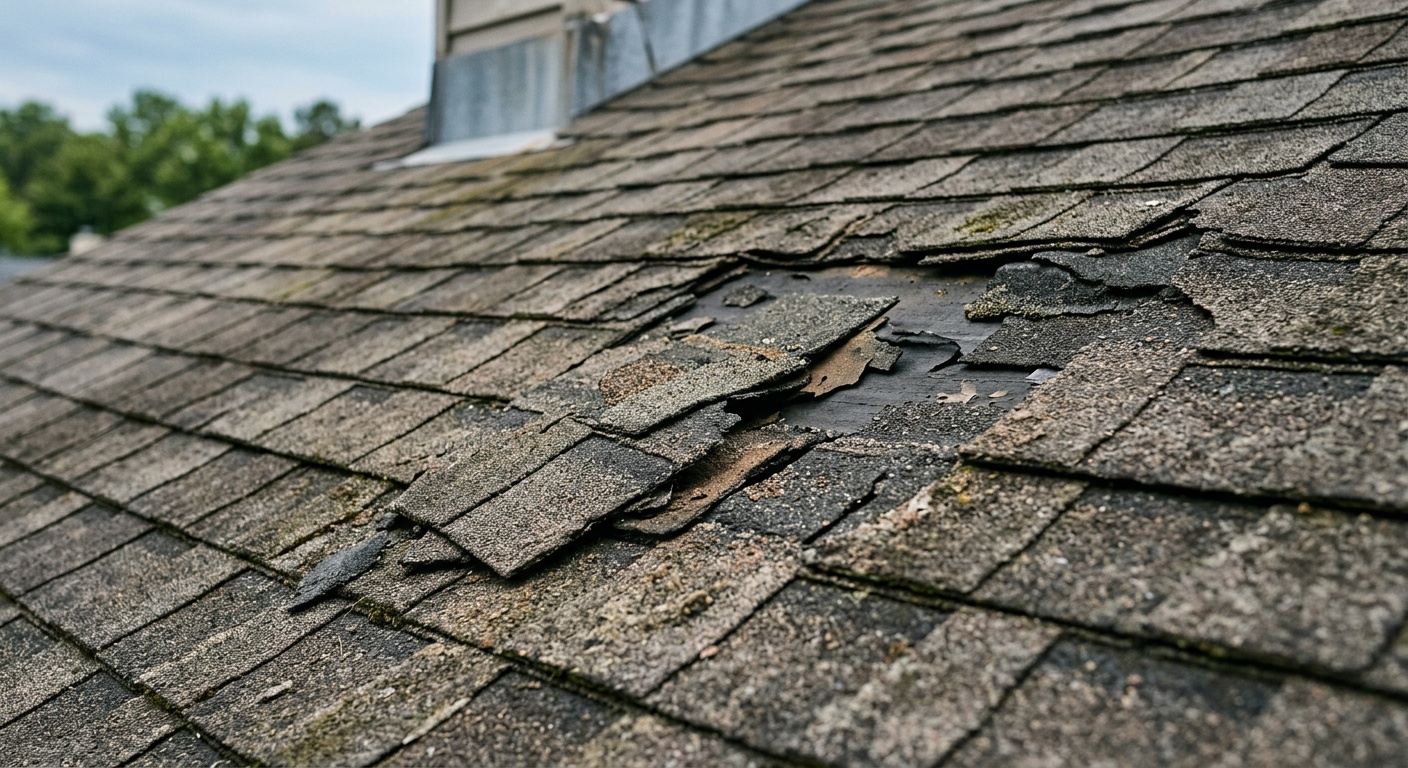
- Curling or cupping edges: When shingle edges curl upward (cupping) or the middle buckles upward while edges stay flat (clawing), it signals age-related degradation or moisture imbalance. This is a high-priority warning sign.
- Missing granules: If you notice bare patches on shingles — or find granule deposits in your gutters — your shingles are losing the protective coating that shields them from UV radiation and moisture. Granule loss accelerates exponentially once it begins.
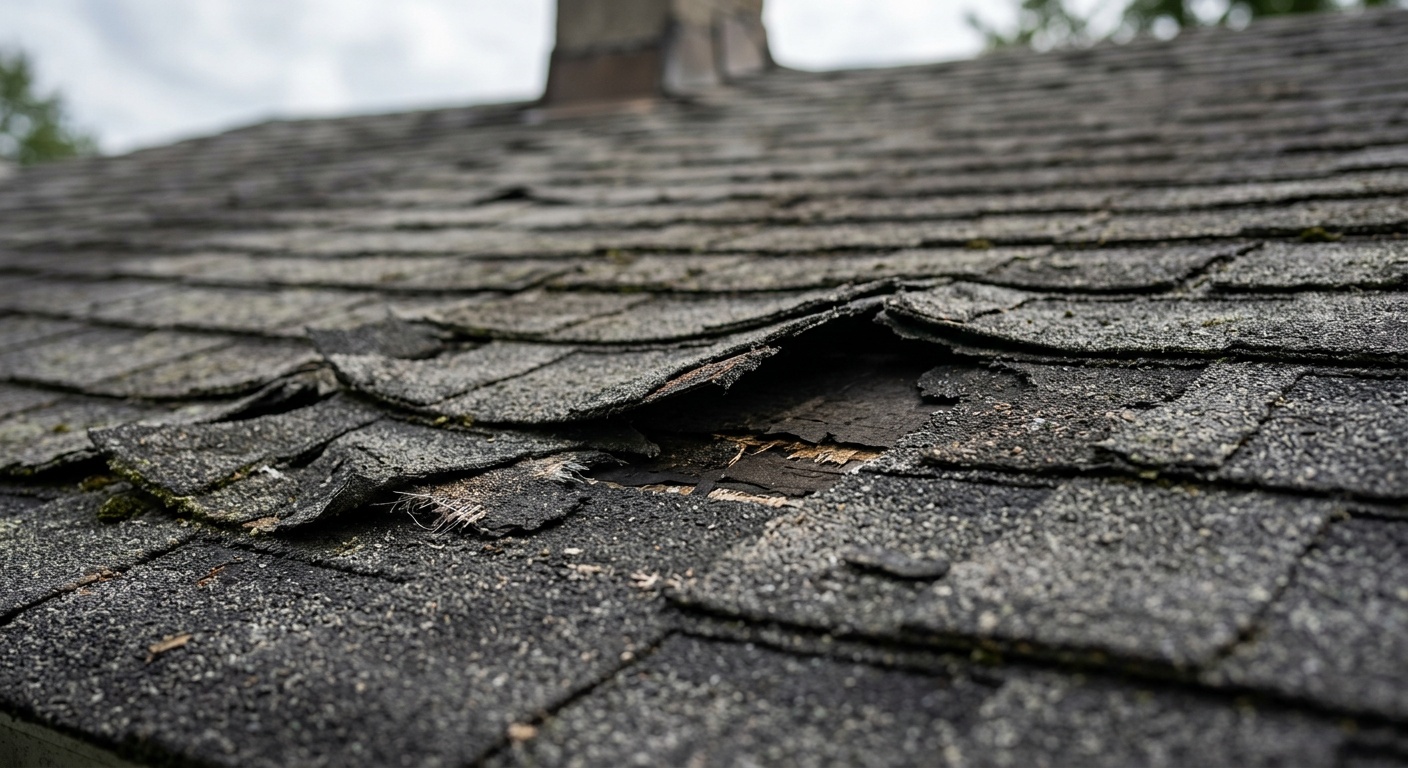
- Cracked or brittle shingles: Visible cracking, especially after a harsh winter or high-heat summer, indicates shingles have lost their flexibility. Cracked shingles allow water infiltration at every seam.
- Missing shingles: This one seems obvious, but many homeowners don’t notice missing shingles until after a storm. Even a single missing shingle creates a direct pathway for water intrusion.
- Dark streaking or staining: Black streaks running vertically down your roof are typically Gloeocapsa magma, an algae that feeds on limestone filler in shingles. Left untreated, it significantly reduces shingle lifespan.
Structural and Flashing Issues
Beyond shingles, pay close attention to the structural elements and transition points on your roof — these are statistically the most common entry points for water damage.
- Sagging or uneven roof planes: Any visible sagging, dipping, or waviness in your roofline suggests structural compromise — either in the decking beneath the shingles or in the supporting rafters. This is an emergency-level warning sign requiring immediate professional assessment.
- Damaged or missing flashing: Flashing — the metal strips that seal transitions between your roof and chimneys, vents, skylights, and walls — is responsible for a disproportionate share of roof leaks. Rust, gaps, or lifted sections need urgent attention.
- Moss and lichen growth: While aesthetically unpleasant, moss is also actively damaging. Moss roots penetrate between shingles, lifting them and allowing moisture underneath. In 2025, moss-related damage accounted for an estimated 11% of premature shingle failures in the Pacific Northwest and Northeast regions.
- Deteriorating fascia and soffit: Rotting or damaged fascia boards and soffits aren’t just cosmetic — they’re structural entry points for water, pests, and cold air.
Interior Red Flags: What’s Happening Inside Your Home
Some of the most telling roof warning signs are discovered not on the roof, but inside your attic or living spaces. A quarterly attic inspection takes about 15 minutes and can save tens of thousands of dollars.
Attic Inspection Essentials
Your attic is ground zero for early roof damage detection. Grab a flashlight and look for:
- Daylight through roof boards: If you can see light coming through any gaps, water and cold air can too. No exceptions.
- Water stains or streaking on rafters: Even old, dried stains indicate previous leaks — which means the entry point still likely exists and will activate again under wet conditions.
- Wet or compressed insulation: Insulation that’s been wet loses R-value permanently and can become a breeding ground for mold. If your energy bills have risen unexpectedly, compromised attic insulation from roof leaks may be the culprit.
- Mold or mildew growth: Mold in the attic almost always indicates moisture intrusion — either from roof leaks or inadequate ventilation. Either way, it demands immediate investigation.
- Frost or ice on interior roof surfaces in winter: This indicates warm air is escaping from your living space and condensing on cold roof surfaces — a ventilation problem that accelerates wood rot and structural decay.
Interior ceiling and wall warning signs in your living areas include:
- Water stains or discoloration on ceilings (even small ones)
- Peeling paint near ceiling edges or on exterior walls
- Sudden appearance of musty or earthy odors
- Bubbling or blistering interior wall paint
Seasonal Stress Points: What Each Season Does to Your Roof
Roofs don’t degrade uniformly — each season applies different stresses that can expose or accelerate specific vulnerabilities. Understanding these patterns helps you know exactly when and what to inspect.
Spring (Current Season Focus): Spring is when winter damage becomes fully visible. Freeze-thaw cycles create ice damming that forces water under shingles. Post-winter inspection should focus on lifted shingles, damaged flashing around chimneys, and clogged gutters from debris accumulation. In 2026, many regions experienced record freeze-thaw cycling in January and February, making spring inspection particularly critical this year.
Summer: Prolonged UV exposure, heat cycling, and intense storm activity stress shingle adhesion and accelerate granule loss. Thermal expansion can also open gaps in flashing seals. Inspect after any hailstorm or high-wind event — insurance claims filed promptly are far more successful than those filed months after the damage event.
Fall: Falling leaves and debris accumulate in valleys and gutters, creating moisture traps. This is also your final window to address any issues before winter. Blocked gutters are a leading cause of ice dam formation, which ranked as a top-five roof damage claim in 2025.
Winter: Ice dams, heavy snow load, and extreme temperature drops are the primary stressors. A roof already compromised by earlier-season damage is most likely to fail under winter conditions. Snow accumulation exceeding two feet requires proactive removal with a roof rake to prevent structural overload.
Roof Damage by Cause: 2025 Industry Breakdown
Based on 2025 insurance claims and roofing contractor data compiled by the Insurance Information Institute and NRCA, here’s how roof damage breaks down by primary cause:
Primary Causes of Residential Roof Damage (2025)
Note: Percentages reflect claims where each factor was identified as a primary or contributing cause. Source: NRCA / Insurance Information Institute, 2025.
Repair vs. Replace: A Decision Framework
One of the most challenging decisions homeowners face is whether to repair a damaged roof or replace it entirely. Here’s a practical comparison matrix to guide your thinking:
| Factor | Repair (Targeted Fix) | Full Replacement | Recommendation |
|---|---|---|---|
| Roof Age | Under 15 years | Over 20 years | If 15–20 yrs, get professional assessment |
| Damage Extent | Under 25% of surface | Over 40% of surface | 25–40% often tips toward replacement |
| Estimated Cost | $400–$3,500 avg (2026) | $9,000–$22,000 avg (2026) | If repair >40% of replacement cost, replace |
| Structural Integrity | Decking/rafters sound | Decking rot or sag present | Structural damage always = replacement priority |
| Insurance Coverage | May cover specific damage | Often covers storm-triggered replacements | File claims within 30–60 days of event |
Real-World Scenarios: Learning From Others’ Mistakes
Case Study 1: The “It Can Wait” Homeowner in Atlanta
In the spring of 2025, a homeowner in the Atlanta metro area noticed several dark streaks and a handful of curled shingles near the rear of their home. With no active leaks visible and a busy schedule, they decided the issue could wait until fall. That summer, back-to-back severe thunderstorms — a pattern increasingly common in the Southeast — drove water under those compromised shingles. By August, they had significant water intrusion into the master bedroom ceiling, damaged insulation in a 200-square-foot attic section, and early-stage mold growth on two rafters.
The final repair bill: $14,200 — covering partial roof replacement, mold remediation, insulation removal and reinstallation, and ceiling drywall repair. A professional inspection in March would have cost $350, and the identified repairs approximately $800–$1,200. The cost of delay: over $13,000 and three weeks of contractor disruption.
Case Study 2: The Proactive Homeowner in Minneapolis
Contrast that with a Minneapolis homeowner who, following a record February freeze-thaw cycle in 2026, noticed ice staining along the eave edge of their home. Instead of waiting, they scheduled a post-winter inspection immediately. The inspector identified two areas of lifted flashing near the chimney and a section of damaged drip edge along the north face. Total repair cost: $680. Their roof is now properly sealed heading into spring storm season, and their insurance premium remained unchanged.
The lesson isn’t complicated: early action compounds in your favor. Delayed action compounds against you. Every season you wait with an identified problem, the probability of escalation increases — and in roofing, escalation is almost always expensive.
3 Common Challenges Homeowners Face (and How to Beat Them)
Challenge 1: “I Can’t Tell What’s Normal Aging vs. Actual Damage”
This is the most common frustration homeowners express, and it’s legitimate. Roofs show wear naturally, and not every aged shingle requires emergency action. The key distinction is rate of change. Gradual, uniform granule loss across an older roof is normal aging. Sudden, patchy granule loss concentrated in certain areas — especially after a hailstorm — is damage. Similarly, minor surface cracking in 20-year-old shingles is expected; widespread cracking in a 10-year-old roof is a red flag for installation quality problems or manufacturing defects.
Solution: Document your roof annually with photos. Year-over-year comparison is the most reliable way to distinguish accelerating deterioration from normal aging. A free smartphone photograph taken from the same ground position each spring creates an invaluable baseline.
Challenge 2: Finding a Trustworthy Contractor in a Crowded Market
The 2025 storm season triggered a flood of out-of-state roofing contractors canvassing neighborhoods with door-to-door pitches. The NRCA reported a 40% increase in consumer complaints about storm-chaser contractors in 2025. Signs of a problematic contractor include: requiring full payment upfront, pressure to sign same-day, no local physical address, inability to provide certificate of insurance, and offers to “cover your deductible” (which is insurance fraud in most states).
Solution: Prioritize contractors with verifiable local history, manufacturer certifications (such as GAF Master Elite or CertainTeed SELECT ShingleMaster status), and documented Google/BBB reviews from the past 12 months. Always get three written estimates before committing.
Challenge 3: Navigating Insurance Claims Effectively
Many homeowners dramatically undervalue their insurance coverage for roof damage because they don’t know how to document claims effectively. Insurers routinely deny or underpay claims that lack proper documentation or were filed too late after a damage event.
Solution: Within 24–48 hours of any significant storm, conduct a ground-level inspection and photograph any visible damage. File your claim promptly — most policies have a 60-day reporting window, but earlier is always better. Request that your insurer’s adjuster inspection be accompanied by your own contractor’s representative. Don’t accept the first settlement offer without having it reviewed by your contractor. In 2025, homeowners who used public adjusters or contractor advocates in contested claims received an average of 34% more in settlement value, according to policyholder advocacy data.
Frequently Asked Questions
How often should I inspect my roof, and do I need a professional to do it?
A self-inspection from ground level should be done at least twice a year — ideally in spring after winter weather and in fall before cold weather arrives. Additionally, inspect within 48 hours after any significant storm event. Professional inspections are recommended every two to three years for roofs under 15 years old, and annually for roofs over 15 years. A professional can safely access the roof surface and identify issues — particularly in valleys, around flashing, and on the roof deck — that are invisible from the ground. In 2026, many certified inspectors now use drone technology to provide detailed photographic documentation without any physical access risk.
Can I repair a few shingles myself, or should I always hire a professional?
Minor repairs — replacing one or two missing shingles in accessible, low-slope areas — can be DIY projects for homeowners with basic comfort on ladders and proper safety equipment. However, anything involving flashing repair, valley work, chimney surrounds, or any structural concerns absolutely requires a licensed professional. The risk calculus is simple: an improperly sealed DIY repair often creates worse water infiltration than the original damage, and a single incorrect repair that leads to interior damage can void your homeowner’s insurance claim for that damage. When in doubt, the cost of a professional repair almost always justifies itself.
My roof is 18 years old but has no visible issues. Should I still be concerned?
Yes — and this is actually one of the most common situations where homeowners are blindsided. Standard three-tab asphalt shingles have a rated lifespan of 20–25 years, but rated lifespan assumes proper installation, adequate ventilation, and average weather conditions. In 2026, with the weather severity increases of the past several years, many roofs are reaching functional end-of-life 3–5 years ahead of their rated lifespan. An 18-year-old roof with no obvious visible symptoms should receive a professional inspection specifically to assess decking condition, flashing integrity, and remaining granule coverage. This assessment will tell you whether you have 2 years or 7 years remaining — which is critical financial planning information.
Your Roof Protection Action Plan: Start Today
The most powerful insight from everything we’ve covered is simple: roof protection is a proactive discipline, not a reactive crisis response. Here’s your immediate action roadmap:
- Step 1 — This Weekend: Conduct a ground-level exterior inspection using binoculars. Photograph your roof from all four sides and check your gutters for granule deposits. Check your attic with a flashlight for any signs of daylight, staining, or moisture.
- Step 2 — Within 30 Days: If you identify any of the warning signs covered in this article, or if your roof is over 15 years old, schedule a professional inspection. Most reputable contractors offer free or low-cost inspections. Get the assessment in writing.
- Step 3 — Before Any Major Weather Season: Clear your gutters completely. Trim any tree branches within 6 feet of your roofline. Ensure attic ventilation is unobstructed. These three actions alone prevent a significant percentage of avoidable roof damage.
- Step 4 — Document Everything: Create a simple digital folder for your roof — photos, inspection reports, repair receipts, warranty documents. This documentation is your most valuable asset when filing insurance claims or selling your home.
- Step 5 — Plan Financially: If your roof is within 5 years of end-of-life, start a dedicated replacement fund. Average 2026 replacement costs are $11,000–$22,000 for standard residential roofs. Knowing this is coming lets you plan rather than panic.
In a landscape where roofing costs are rising, weather is increasingly severe, and home values depend heavily on structural integrity, roof awareness is a core financial competency — not just a maintenance chore. The homeowners who avoid the devastating repair bills aren’t luckier; they’re simply more attentive.
Here’s the question worth sitting with: If your roof sent you a distress signal yesterday, would you recognize it? After reading this guide, the answer should be a confident yes — and that knowledge is worth considerably more than the time you just invested in gaining it.